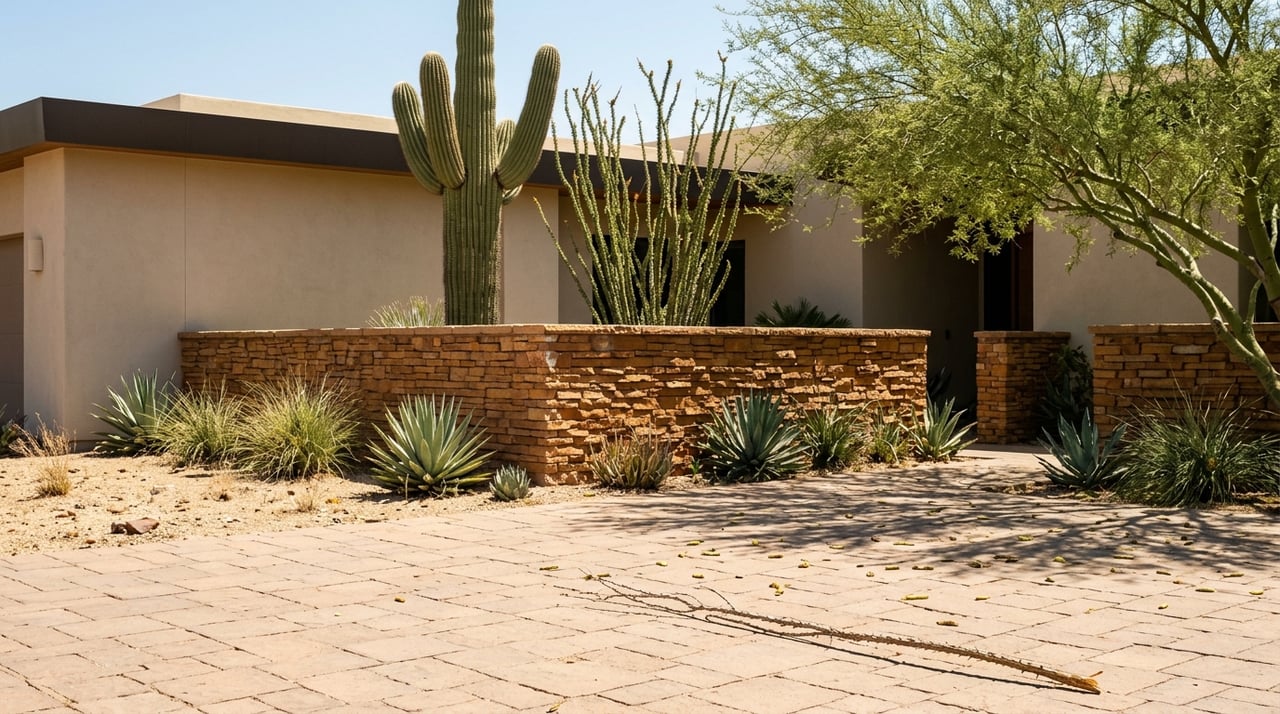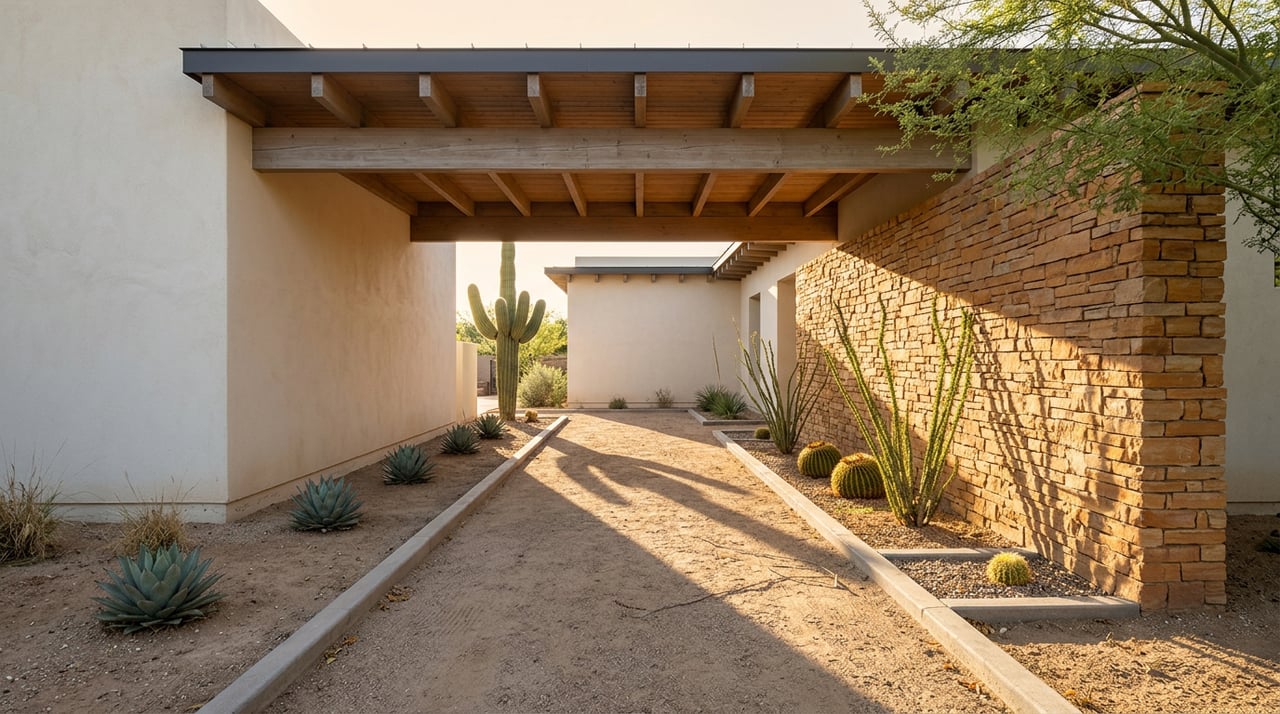
Most Cave Creek listings look like a pricing conversation from the outside. Median sold price, days on market, one number against another. That framing works for a tract home in south Cave Creek on town water and sewer. It falls apart the moment the property sits on acreage in the foothills, off Spur Cross, or in the unincorporated Desert Hills pockets served by wells and on-site septic.
For those homes, the deal is not driven by price. It is driven by paperwork that Arizona rule requires you to complete on a fixed schedule, and by 2026 water headlines that have made buyers pay closer attention than they did last year.
The thesis of this post is simple: in Cave Creek's well-and-septic inventory, the transfer-of-ownership inspections and disclosures are the closing date. Miss them and price stops mattering.
The paperwork that actually sets the timeline
Two separate infrastructure transfers run in parallel on most rural Cave Creek closings. They come from different agencies, use different forms, cost different fees, and trigger at different points in the transaction. Confusing them is where deals slip.
| Item | Septic (on-site wastewater) | Private domestic well |
|---|---|---|
| Governing rule | A.A.C. R18-9-A316, requiring a qualified inspection within six months prior to transferring ownership | AAR Domestic Water Well Addendum and DWWA-SPDS; ADWR change-of-well-information |
| Who orders the inspection | Seller | Buyer, as part of inspection period |
| Key document | ADEQ Report of Inspection (ROI) | AAR DWWA-SPDS completed by seller |
| Buyer disapproval window | Inspection period | Five days after Contract acceptance for DWWA SPDS delivery, with buyer notice of disapproved items after |
| Post-closing filing | Notice of Transfer filed by Buyer within 15 calendar days after transfer, $50 fee in Maricopa County | Form 55-71A Request to Change Well Information filed with ADWR, $30.00 fee |
| Filed with | Maricopa County Environmental Services (or ADEQ) | Arizona Department of Water Resources |
Neither one is optional. The requirement to have the septic inspected within six months prior to transfer is a provision of Arizona rule and takes precedence over any conflicting terms in the purchase contract. A seller who tries to negotiate around it is negotiating against the state, not the buyer.
Why 2026 changed the questions buyers are asking
Cave Creek buyers used to skim the water section of a disclosure. In 2026 they read it twice. Three specific developments explain the shift.
The CAP cut. The Town of Cave Creek is currently 95% dependent on water from the Colorado River via the Central Arizona Project, pumped through a 12-mile pipeline to the Town's water treatment plant. For the first time in years, Cave Creek did not receive additional Non-Indian Agriculture allocations from CAP; that supply was cut 100 percent in 2026.
The rate restructure. Council approved a 6% increase in revenue and a change to the rate structure for Cave Creek Water, Cave Creek Wastewater and Desert Hills Water, taking effect on Feb. 5, 2026.
The utility sale process. At the March 24 Special Town Council Meeting, the Council voted unanimously to expand the Invitation for Bid to include all of the Town's utility systems: Desert Hills, Cave Creek Water, and Cave Creek Wastewater, so that submitted bids can be evaluated to determine whether to keep the utilities or sell them. The Council retained Raftelis to assist with the IFB process for $114,000.
None of this changes the closing paperwork. It changes what buyers do with the paperwork. A property on a private well now reads as insulated from utility-rate risk. A property in the Desert Hills service area, where the system depends on a decreasing groundwater supply plus water supplied by the Town of Cave Creek, with roughly 75 percent from renewable Colorado River surface water and 25 percent from three groundwater wells, invites more due-diligence questions than it did in 2024. Sellers who anticipate those questions close faster.
The septic timing trap
Sellers reliably underestimate the septic inspection window. Six months sounds generous. It is not, because the inspection has prerequisites.
Except in rare circumstances, the septic tank must be pumped as part of the inspection. That means scheduling a licensed pumper, then the qualified inspector, then having the tank refilled and settled before anything can be signed off. In Cave Creek and Carefree, local operators like Sewer Time Septic & Drain and Cave Creek Septic Service handle both roles. Septic pumping in Cave Creek typically costs between $300 and $600, depending on tank size, accessibility, and how long since the last pump.
The document itself is not filed with the state agency. The inspector prepares a Report of Inspection form and provides it to the seller; the ROI is not filed with ADEQ, as it involves communication on the status of the onsite wastewater system between the seller and the buyer. The seller must hand it to the buyer before closing along with any permitting and maintenance records they have.
After closing the buyer is on the clock. Within 15 calendar days after the date of property transfer, the Buyer submits a completed Notice of Transfer for the change of ownership. The fee for a Notice of Transfer is $50 in Maricopa County. Missing that window creates a compliance issue attached to the new owner, not the seller, which is the kind of surprise a good buyer's agent flags early.
What the well addendum forces sellers to remember
The Arizona Association of Realtors requires two forms on any transaction with a private or shared well. The Domestic Water Well/Water Use Addendum to Seller Property Disclosure Statement must be delivered to the Buyer and Escrow Company within five days after Contract acceptance. The seller answers, in writing, questions most well owners have never sat down to answer.
Expect the buyer to want documentation on:
- ADWR well registration number and current owner of record
- Whether the well is physically on the property or off-site
- Any shared-well agreement, and whether it is recorded with Maricopa County
- Flow-test results for yield and recovery
- Age and service history of the submersible pump
- Water-quality tests, particularly for arsenic in the north Valley aquifer
- Any history of the well failing to produce adequate water for domestic use
The pump matters because replacement is expensive. In the Desert Hills, New River, and Cave Creek corridor, submersible pumps can last 10 to 15 years under normal conditions, but running in water with high mineral content, common in this corridor, can accelerate wear. Pulling and replacing a pump from a deep well is not trivial; pulling a pump from 400 to 600 feet requires a licensed pump contractor with a crane truck, and the budget runs $2,000 to $5,000 or more depending on depth, pump size, and current labor rates. A seller who has recent service records shortens negotiation. A seller who does not gives the buyer a lever.
At closing, if the well is physically on the parcel, escrow is instructed to send ADWR a completed Change of Well Information form and transfer fee, with the fee paid by whichever party the contract specifies. A change form is only needed if the well is physically located on the property being purchased.
The shared-well conversation nobody wants at day 25
Horse properties and older splits along Spur Cross and the far north lots frequently share a well with one or two neighbors. Sellers often assume the state referees the arrangement. It does not.
A shared well agreement is a civil matter between the private parties. The Department does not regulate shared well agreements and cannot advise on them. Therefore, the Department has no regulations pertaining to how many people can share a well. When something goes wrong mid-transaction, ADWR is not the fix.
Three questions come up on almost every shared-well closing in Cave Creek:
- Is there a written, notarized, recorded agreement?
- Does the agreement identify the well by its ADWR registration number?
- Do the obligations run with the land, or with the individuals who signed?
If the answers are yes, yes, and with the land, the transaction proceeds normally. If the agreement was never recorded, or if it only names the prior owners, the buyer's title company will ask the seller to fix it before closing. That work can take longer than the inspection period allows, which is why identifying a shared-well property at listing, not at contract, protects the timeline.
A realistic closing sequence for a well-and-septic home in Cave Creek
Here is what the calendar looks like when everything is done in the right order:
- Listing prep. Locate the well registration number in the ADWR registry, pull septic permit records from Maricopa County, and gather any prior ROI, pump service invoices, and water-quality tests.
- Contract acceptance. DWWA-SPDS delivered within five days. Buyer opens inspection period.
- Inspection period. Buyer orders well flow test, pump age check, and water-quality test. Seller schedules septic pump and inspection with a qualified inspector.
- Report of Inspection. Delivered from seller to buyer before closing along with all septic documentation the seller holds.
- Closing. Escrow files ADWR Form 55-71A with the $30 fee if the well sits on the parcel. Seller hands buyer the septic ROI and record file.
- Post-closing, day 1 to 15. Buyer files the Notice of Transfer with Maricopa County and pays the $50 fee.
Every step in that sequence has a defined actor. The order is what makes a smooth closing look effortless, and the disorder is what turns a straightforward Cave Creek sale into a 60-day scramble.
A short FAQ
Does the septic rule apply if the system is brand new? Usually no. A.A.C. R18-9-A316(F) allows the Seller to forgo the transfer inspection if the system has never been used, which typically occurs when a builder or developer sells a house with a newly constructed on-site system.
Who pays the well transfer fee? The purchase contract decides. On the AAR Domestic Water Well Addendum, the fee line can be checked as Buyer, Seller, or Other, and it is negotiable like any other cost.
What if the well is on my neighbor's parcel? No ADWR change form is required from your closing. A Request to Change Well Information form only needs to be submitted if the well is physically located on the property being purchased. The shared-well agreement still governs your rights.
Are Cave Creek water rates about to jump on well properties? No. Rate action applies to Cave Creek Water, Cave Creek Wastewater, and Desert Hills Water customers. Private-well owners are outside that system. What can shift are appraisal and buyer perception around properties on the town or Desert Hills systems, especially while the Invitation for Bid process runs.
Working the deal from here
If you are preparing a Cave Creek listing on well and septic, the right time to gather your documentation is before the sign goes in the yard, not after the inspection period opens. If you are buying, the right time to ask about the ROI, the pump age, and the shared-well agreement is inside the first week, when there is still room to negotiate.
Tiffany Burks and the team at Premier Realty Group handle these transactions across Cave Creek every quarter and can walk you through the specific paperwork your property will need. Get in Touch when you are ready to talk timing, disclosures, or pricing on a well-and-septic home.